Romuald Pliquet
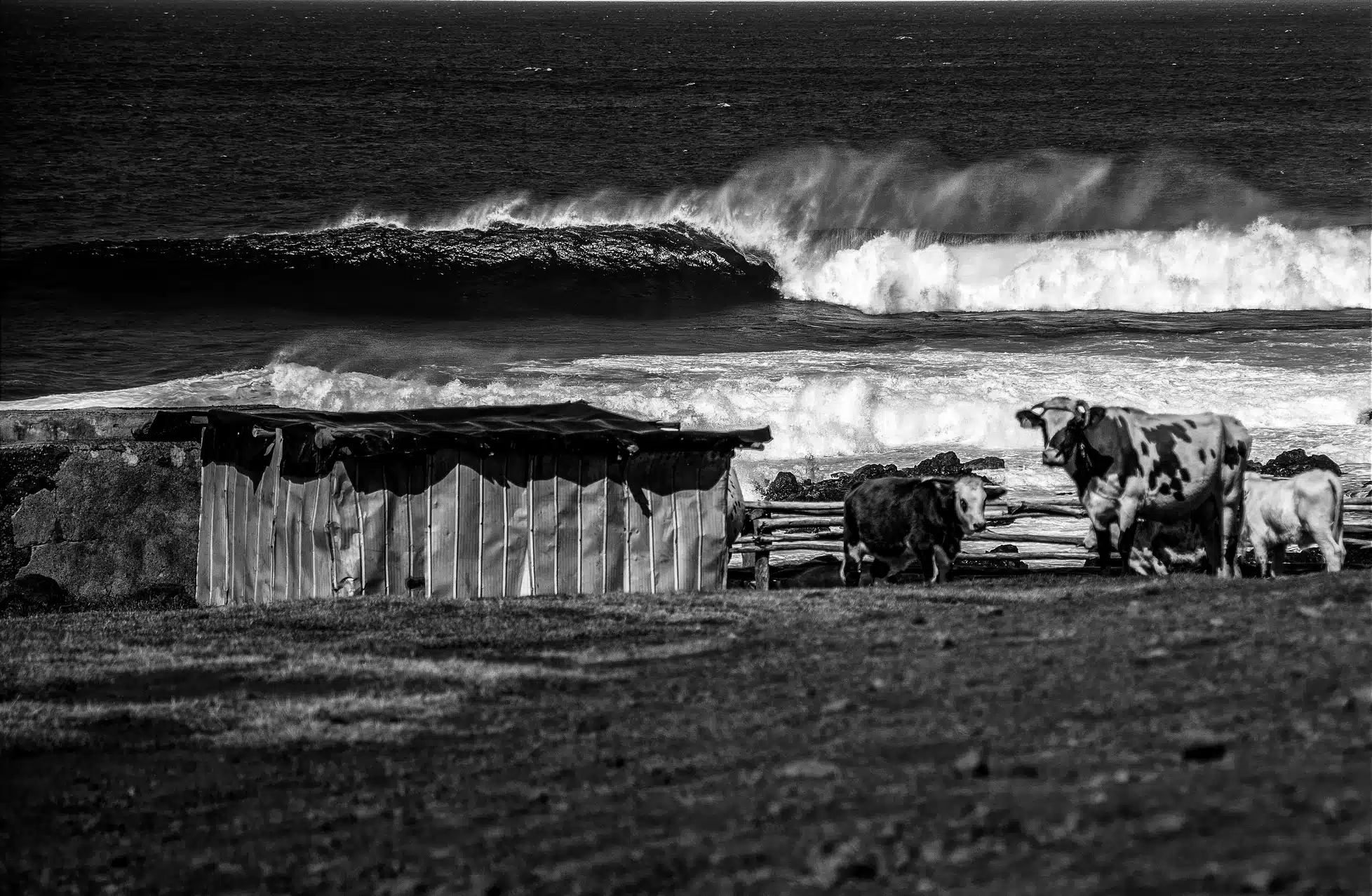
Cow garden
Discovered on Easter Day in 1722 by the Dutch navigator Jakob Roggeveen, Easter Island—or *Rapa Nui* in the local language—is likely one of the few places on Earth where the words “mystery” and “fascination” truly come to life.
Renowned for its monumental statues known as *Moai*—standing atop altars called *Ahu*—and for its unique Oceanic script, *rongorongo*, this island in the southeastern Pacific lies more than 2,000 kilometers from any inhabited land. Even that nearest landmass is itself an island: Pitcairn—another site steeped in history within the context of trans-Pacific voyages, having served as a refuge for the mutineers of the *Bounty*.
Carved from tuff—primarily from the Rano Raraku quarry—these monoliths have long captivated the human imagination. They have inspired—and continue to inspire—wild theories: from extraterrestrial intervention to the idea that they represent the peaks of the sunken continent of Atlantis, or even the notion that they once walked across the island to reach their current positions.
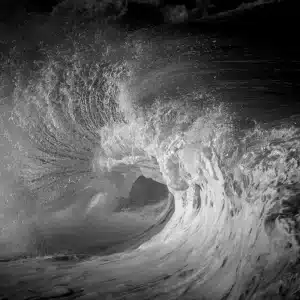
Visiting the island felt like a natural choice—not to seek answers regarding these statues standing in the middle of the Pacific, their hollow gazes turned toward the land, but rather to discover what is happening in the ocean itself. Perhaps these *Moai* are guarding an oceanic treasure against intruders daring to venture into the waves that lap frantically at their feet?
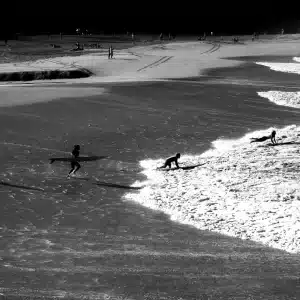
I needed the ancestors’ blessing before I could hope to launch my surfboards into the water under the watchful gaze of those lifeless eyes. To that end, two Rapa Nui natives and descendants joined me on this personal quest. However, very quickly—after riding a few crystal-blue barrels—my interest shifted to this small surfing community. They have absolutely no desire to leave their island, despite its undeniable isolation; instead, they seek to share the cultural heritage stemming from the Polynesian people’s migration across the Pacific.
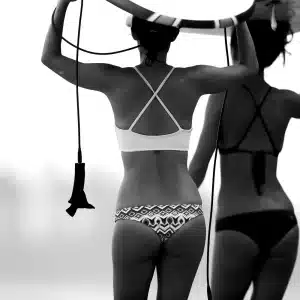
My first companion is Vaenga Teao. Born in Hanga Roa, the island’s main town, he has been surfing for over 25 years and, together with his brother, has run Rapa Nui’s very first surf school for two decades. My second companion is a woman who holds the distinction of being the island’s first female surfer; she is also a three-time Chilean champion training relentlessly to secure a qualifying spot—via the Pan American Games—for the Tokyo 2020 Olympics. Her name is Pomare Tepano.
Surfing there—much like in its Polynesian Triangle cousins (Hawaii, Rapa Nui, and New Zealand)—originated from the heritage of Polynesian people who arrived from Tahiti and its islands, and was later revived by Duke Kahanamoku in Hawaii. However, unlike their neighbors, the Rapa Nui did not experience the same evolution of modern surfing and board design, partly due to their isolation from the outside world. While Hawaiians were modernizing traditional wooden boards like the *olo* and *alaia* to rediscover the joy of wave-riding—a practice once banned by colonizers—… Lacking wood on the island—which had been frantically and recklessly cut down to transport the statues—the Rapa Nui people used “Tortora,” a bundle of reeds found only in the Ranu Kao crater lake.
These reed floats played a starring role every spring during the year’s biggest festival. It was a competition centered on retrieving a sooty tern egg, preceded by a religious ceremony dedicated to the Birdman cult. Known as “Tangata Manu,” the festival aimed to select a secondary king for Rapa Nui to serve a one-year term. Competitors would gather at the Orongo cliffs and set out on their Tortora floats toward the Birdman islet—located over two kilometers offshore—to be the first to retrieve an egg laid on the Motu Nui islet. The challenge also required climbing a sheer 180-meter cliff and carrying the egg back on one’s head—without breaking it, of course. The winner gained considerable power for the year, becoming the king’s deputy or a military leader. Given the frequent inter-tribal warfare, the importance of this figure becomes clear. The competition continued until the late 19th century but eventually died out as the native Rapa Nui population dwindled and traditions were lost; by 1910, it was estimated that only 110 direct descendants of the original Rapa Nui people remained on the entire island.
Nevertheless, the “Tortora” continued to fascinate the Rapa Nui people, and its use shifted increasingly from a quest for power to a pursuit of leisure. Its wake only came to an end very recently…
Price range: 60,00 € through 1.150,00 €